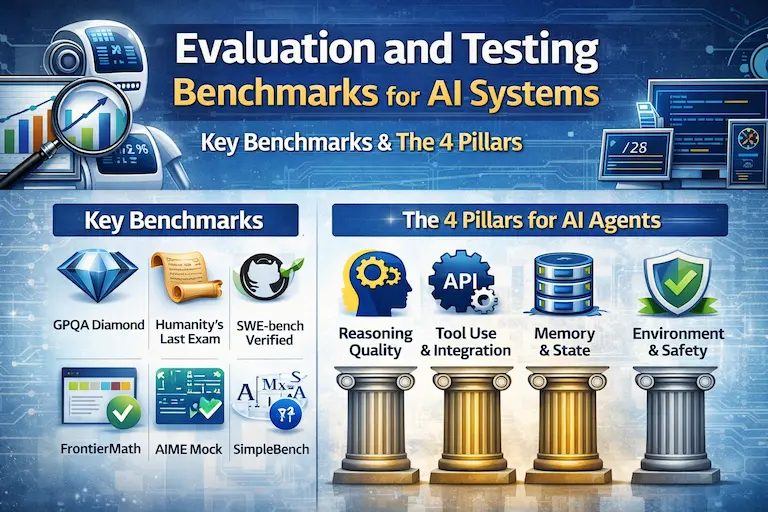
Evaluation and Testing Benchmarks for AI Systems – How to know whether your model, chatbot, or agent workflow is actually performing as expected
You shipped a chatbot. The demo looked great. Then real users started sending edge cases, and suddenly your “intelligent” assistant is hallucinating product features that don’t exist. Sound familiar? The gap between a working prototype and a production-grade AI system almost always comes down to one thing: evaluation. Without a
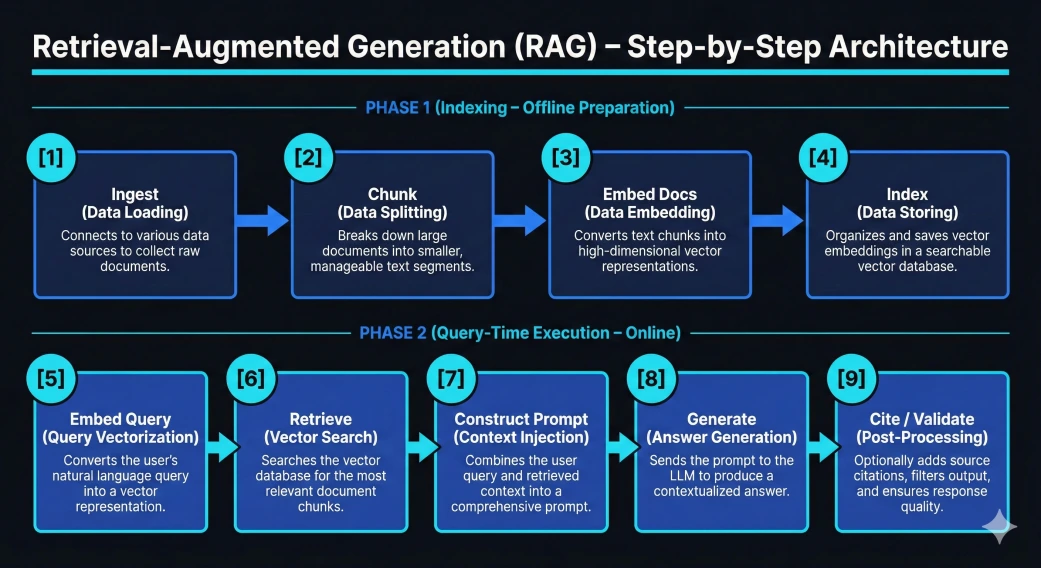
Retrieval-Augmented Generation (RAG): A Simple, Step-by-Step Architecture
RAG gets thrown around a lot — in pitch decks, job postings, LinkedIn hot takes. But when you strip away the hype, what’s actually happening under the hood? RAG is a two-phase system: Phase 1 — Indexing (Offline Preparation) Phase 2 — Query-Time Retrieval + Grounded Generation (Online Execution) No
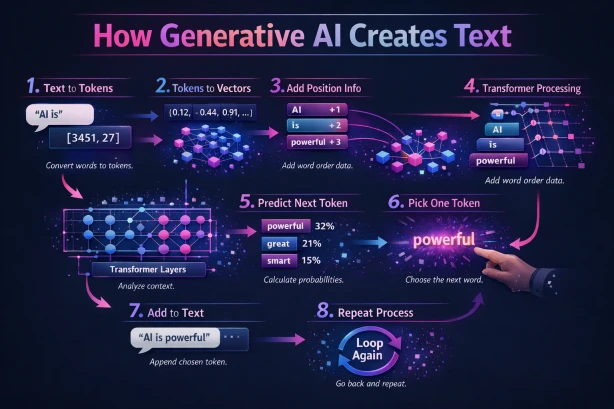
How Generative AI Creates Text: The 8-Step Loop Behind Every Word AI Writes
Generative AI doesn’t “think” the way humans do. There’s no inner monologue, no sudden flash of inspiration, and definitely no existential crisis about word choice. What it does do is perform a very specific mathematical sequence — over and over again — to predict the next token. That’s it. One
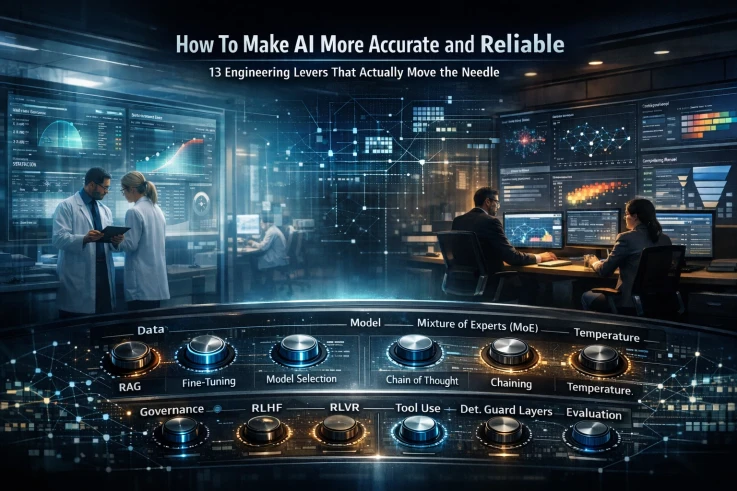
How To Make AI More Accurate and Reliable: 13 Engineering Levers That Actually Move the Needle — From RAG to Reinforcement Learning
Everyone wants their AI to be “more accurate.” But when you ask them how, you usually get one of two answers: “better prompts” or “bigger model.” Both miss the point. Accuracy isn’t a single knob you turn. It’s the result of decisions across your entire stack — from the
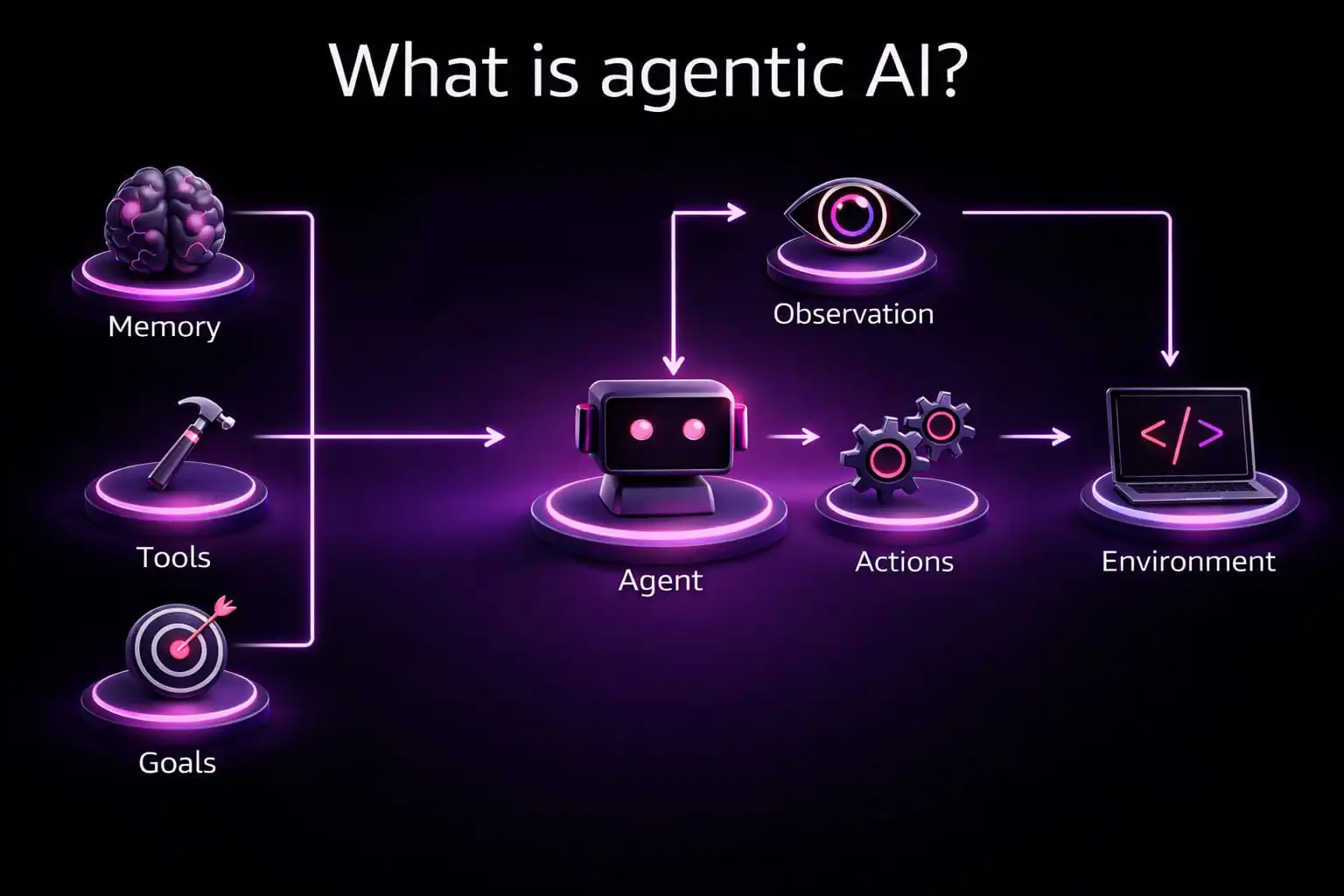
What Is Agentic AI? Beyond Chatbots: Understanding Closed-Loop Autonomous Systems
What Agentic AI Is Not The term agentic AI has rapidly entered mainstream technical discourse, but its meaning has been diluted by conflation with retrieval-augmented generation (RAG) pipelines, chatbots with session memory, and LLM wrappers with tool access. These are useful systems, but they are not agents. An agentic AI
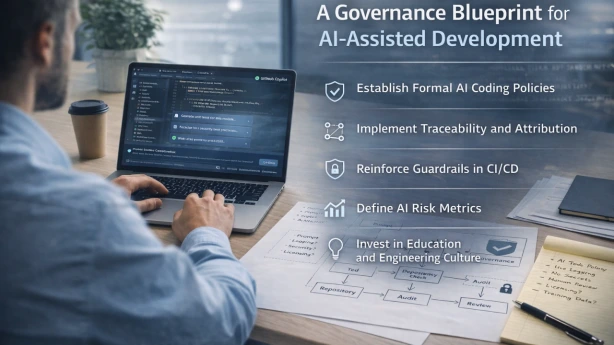
AI-Assisted Coding at Scale: Risks, Governance, and the Future of Software Development
AI-assisted coding tools powered by large language models are rapidly changing how software is built. Practices like vibe coding, where developers describe intent in natural language, and AI synthesizes working code, offer dramatic productivity gains and shift the developer’s role from typing code to directing it. But this shift introduces